

Most people assume that spending more money gives you a better shot at winning. That’s how retail loyalty programs work, and it’s a reasonable assumption. But sweepstakes operate on a completely different logic. Understanding why sweepstakes reward engagement over spending tells you something genuinely useful: you don’t need a big wallet to compete. You need attention, participation, and a willingness to interact. The data backs this up, and the psychology behind it is fascinating. Here’s what’s actually going on.
Table of Contents
- Key takeaways
- Why sweepstakes reward engagement over spending
- The psychology behind engagement rewards
- Sweepstakes vs. traditional spending models
- How to get more out of sweepstakes as a consumer
- Why engagement will keep driving sweepstakes forward
- My take on what this model really changes
- Discover Winviptix’s engagement-first sweepstakes
- FAQ
Key takeaways
| Point | Details |
|---|---|
| Engagement beats spending | Multiple entry methods give every participant equal footing regardless of how much they spend. |
| More actions, more entries | Sweepstakes with 8 to 12 entry methods generate nearly 2,000 entrants, proving interaction drives results. |
| Psychology supports this model | People respond more to frequent, near-term rewards than to large, delayed payouts. |
| Sweepstakes don’t replace spending | Research shows prize draw participants spend the same or more elsewhere, meaning engagement adds value rather than replacing it. |
| Practical tactics exist | Daily check-ins, referrals, and social follows multiply your entries without spending a dollar. |
Why sweepstakes reward engagement over spending
The core design of a sweepstakes is not built around who can spend the most. It’s built around who shows up, participates, and takes action. That distinction matters enormously for consumers.
Most sweepstakes platforms offer multiple ways to earn entries. You might get one entry for signing up with your email, another for following a brand on social media, another for referring a friend, and yet another for completing a daily check-in. Each of these actions is a separate engagement touchpoint. None of them require you to open your wallet.
Here’s where the numbers get interesting. According to campaign data from SweepWidget, sweepstakes with 8 to 12 entry methods generate nearly 2,000 entrants per campaign. More striking: leaderboard-style contests generate 3.3x more actions than standard random draw giveaways. The metric that matters most to well-run sweepstakes is not total dollars entered. It’s actions per entrant.
- Email signup: Low friction, immediate entry, and it starts a relationship.
- Social follows: Quick to complete, adds brand awareness without any cost.
- Referral links: Each referral multiplies your entries and your influence.
- Daily actions: Returning to the platform every day compounds your entry count over time.
- Bonus challenges: Answering a poll or watching a short video can earn extra entries instantly.
Pro Tip: If a sweepstakes offers a leaderboard or daily login bonus, treat those as your highest-priority actions. Leaderboard participation generates significantly more total entries per person than a single sign-up alone.
The sweepstakes engagement benefits here are obvious once you see them. Each method creates a fresh reason to come back, which means your chances grow with time and effort, not just money. That’s a fundamentally different relationship than what traditional spending-based incentives offer.
The psychology behind engagement rewards
There’s a reason this structure works so well on a human level. It’s not accidental design. Behavioral psychology has a direct explanation.
Research on delay discounting confirms that people value near-term rewards far more than larger rewards that arrive later. In plain terms: the closer a reward feels in time, the more motivating it becomes. A sweepstakes that lets you earn entries today, again tomorrow, and again the day after creates a continuous loop of perceived progress. That loop keeps attention alive in a way that a single spending transaction simply cannot.
“Magnitude and timing interact to impact reward valuation and engagement.” — Springer, 2026 study on delay discounting
Compare that to a purchase-based loyalty program where you spend $500 over six months to unlock a reward. By the time the reward arrives, the emotional connection to the original action is nearly gone. The sweepstakes model keeps that emotional loop tight and active.
Here’s a simplified look at how the two models differ psychologically:
| Factor | Spending-based model | Engagement-based sweepstakes |
|---|---|---|
| Reward frequency | Infrequent, milestone-based | Daily or per action |
| Financial barrier | High | Low to none |
| Emotional loop | Delayed, weakened over time | Immediate, sustained |
| User motivation | Transactional | Interactive and social |
| Entry equality | Favors higher spenders | Equal access for all |
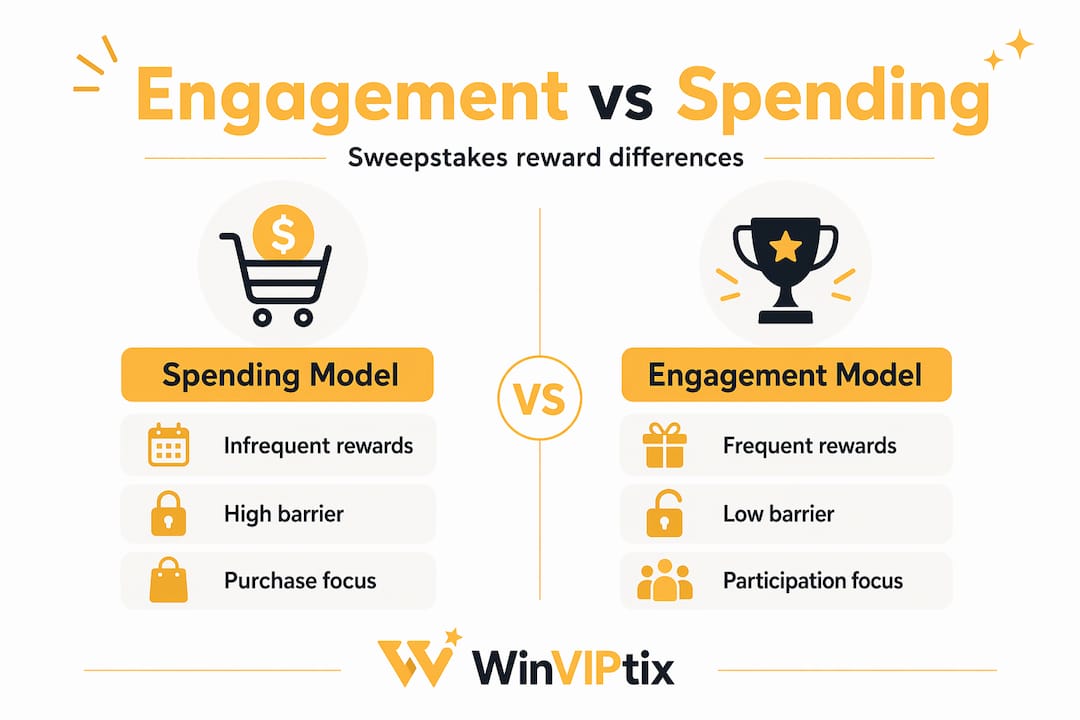
The importance of rewards in contests goes well beyond prize value. Frequency matters. Immediacy matters. And the sweepstakes model, by design, delivers on both of those psychological levers far more effectively than any spending-based alternative.
Sweepstakes vs. traditional spending models
Traditional marketing rewards spending directly. Buy more, earn more. That model has a ceiling: it excludes people who can’t or won’t spend at high levels, and it trains consumers to think transactionally rather than relationally.
Sweepstakes flip that entirely. They reward incremental steps. A first-time entrant who follows your brand on three platforms and refers two friends has created more brand touchpoints than a one-time high-dollar buyer. That’s measurable value that goes far beyond the transaction.
The long-term participation data supports this. U.S. state lottery ticket sales grew from $52.8 billion in 2008 to $104.7 billion in 2024, with prize payouts driving that sustained interest. The mechanism is the same: people keep coming back when the reward structure gives them ongoing reasons to participate.
Critically, sweepstakes don’t cannibalize existing spending habits. Mintel’s 2026 UK Lotteries Report found that prize draw participants spend the same or more on lotteries overall, meaning engagement-focused sweepstakes add to consumer behavior rather than replacing it. This is one of the most underappreciated sweepstakes vs spending strategies insights: you’re not choosing between the two. The engagement model layers on top of existing behavior and creates new value.
Sweepstakes also build brand connection through social, emotional, and interactive elements that a purchase receipt simply cannot replicate. When a consumer shares a referral link or tags a friend in a giveaway post, they’re doing something deeply personal with a brand. That kind of connection has lasting effects on loyalty that no spending metric can capture.

The reasons for choosing engagement over spending come down to access and sustainability. Anyone can engage. Not everyone can spend. And the brands that recognize this build wider, more loyal communities as a result.
How to get more out of sweepstakes as a consumer
Knowing how sweepstakes boost engagement is one thing. Knowing how to use that structure to your advantage is where the real value lies.
Here’s how to approach any sweepstakes with an engagement mindset:
- Complete every available entry method on day one. Most people sign up and stop. Completing all listed actions immediately puts you well ahead of the average entrant.
- Return daily if the platform offers it. Bonus entry actions and daily check-ins turn a single entry intent into a compounding advantage over the campaign window.
- Use referral links strategically. Share them in spaces where your network is already active. Every referral that converts gives you additional entries without additional effort.
- Watch for email reminders. Email follow-ups after initial entry often point to bonus entry windows or limited-time challenges. Opening those emails regularly is itself an engagement action.
- Track your standing if leaderboards are available. Leaderboard mechanics create two natural motivation peaks per campaign. Use that structure to time your highest-effort actions for maximum impact.
Pro Tip: Don’t just enter and forget. Treat a sweepstakes campaign like a short game with daily moves. The entrants who maintain consistent low-effort actions over the full campaign window almost always outperform those who enter once and hope.
The benefits of contest participation are not limited to the prize itself. Active participation builds familiarity with the brand, generates content sharing, and creates a sense of community with other participants. That’s value you receive regardless of whether you win.
Why engagement will keep driving sweepstakes forward
The evidence from psychology, consumer behavior, and campaign performance all points in the same direction. Sweepstakes reward engagement over spending because that’s what works. Frequent interaction triggers the brain’s reward circuitry in ways that a single purchase never does. Multiple entry methods lower the barrier to participation and widen the audience. And the data consistently shows that engaged participants stay active longer and build stronger connections with the brands they interact with.
For consumers, this shift is genuinely good news. The playing field levels out. Your chances aren’t determined by your bank account. They’re determined by your willingness to show up, share, and participate. That’s a model worth understanding and worth using.
My take on what this model really changes
I’ve watched sweepstakes campaigns run for long enough to notice a clear pattern: the ones that prioritize engagement over spending don’t just perform better. They feel different to the people in them.
When I look at campaigns that use leaderboards and multi-step entry methods, the conversation around them is genuinely different. People talk about their progress. They share referral links not just for the entries but because they’re invested. That’s something a points-for-purchase program almost never produces.
What I find most interesting is how the psychological research matches what I’ve seen in practice. Multi-step and bonus entries turn a one-time sign-up into an ongoing experience. That’s not a trick. It’s a design principle that respects the participant’s attention and rewards them for giving it.
My honest take: consumers who approach sweepstakes only through a spending lens are leaving real opportunity on the table. The entry methods that cost nothing, such as a referral, a social follow, or a daily check-in, are often worth more in cumulative entries than a single purchase. Most people never fully use them.
The one pitfall I’d flag is over-investing time in sweepstakes with vague or unverified mechanics. Not all platforms are equally transparent. When the rules are clear, the winners are published, and the entry methods are specific, that’s when the engagement model works exactly as described. The structure has to be trustworthy for the engagement to mean anything.
— Krys
Discover Winviptix’s engagement-first sweepstakes
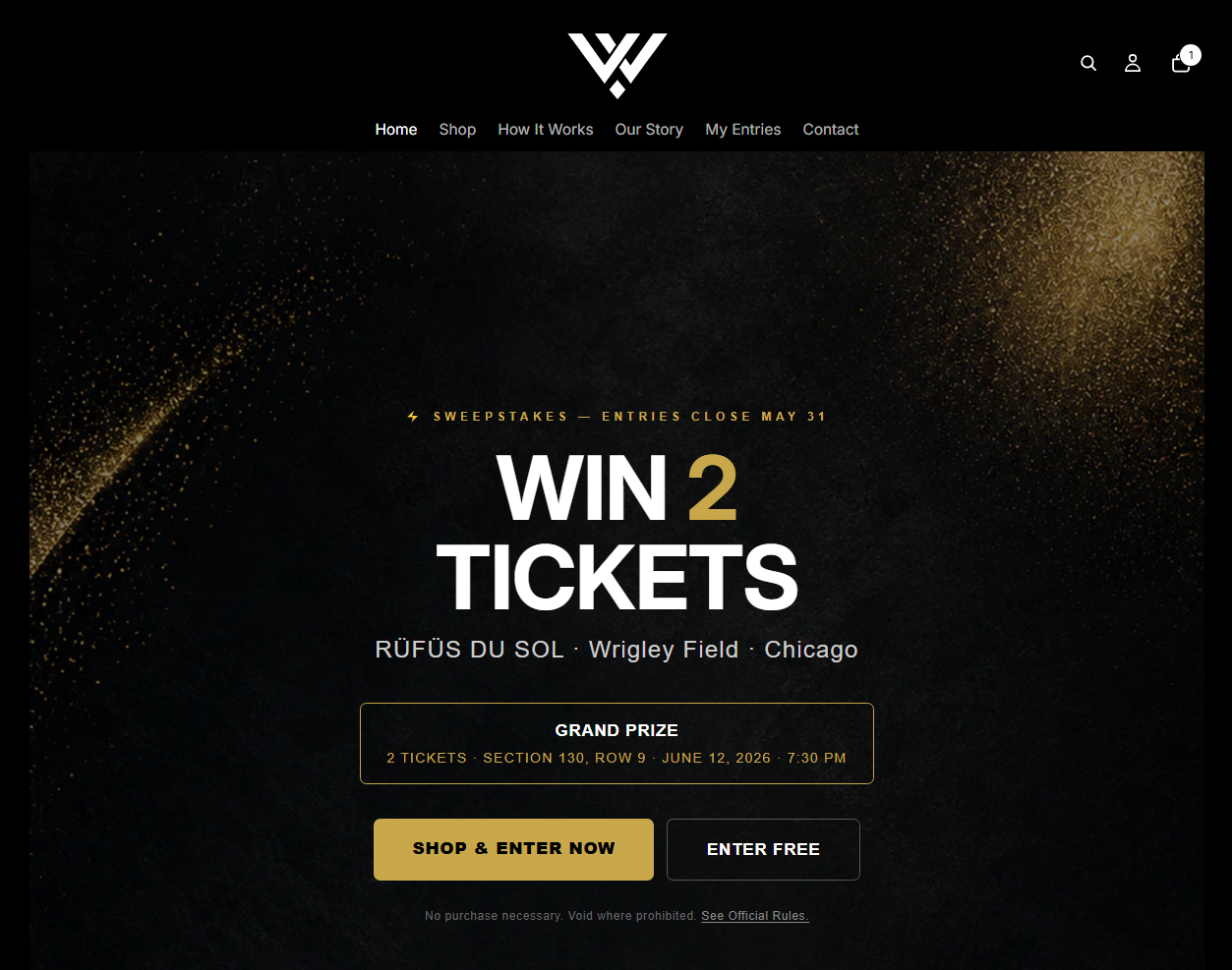
Winviptix is built on exactly the model described here. Every purchase of exclusive digital poster packs or branded merchandise earns entries into major giveaways like concert tickets, and users can earn entries without any purchase at all. That’s the engagement-first design in practice. You can enter current giveaways today using multiple entry methods that have nothing to do with spending. The official rules are fully transparent, and verified past winners are publicly listed. If you want to experience the benefits of contest participation with real prizes and a fair structure, Winviptix is the right place to start.
FAQ
Why do sweepstakes use multiple entry methods?
Multiple entry methods increase the total actions per entrant, which drives higher engagement and wider participation. Campaigns with 8 to 12 entry options generate nearly 2,000 entrants according to SweepWidget’s 2026 data.
Can you win a sweepstakes without spending money?
Yes. Many sweepstakes, including those run by Winviptix, allow participants to earn entries through free actions like email sign-ups, social follows, and referrals without any purchase required.
Why does frequent engagement matter more than prize size?
Delay discounting research shows people respond more strongly to rewards that feel close in time. Frequent entry opportunities create repeated motivation loops that a single large prize with a long wait cannot replicate.
Do sweepstakes affect how much people spend elsewhere?
Research from Mintel’s 2026 UK Lotteries Report shows prize draw participants spend the same or more on related activities, meaning engagement-focused sweepstakes add participation rather than replacing other spending.
How do referral entries change your odds in a sweepstakes?
Each successful referral typically earns additional entries, compounding your total without additional spending. Referrals also create a social sharing effect that extends campaign reach for both the brand and the participant.