

Most shoppers leave real money on the table because they don’t fully understand how merchandise purchases earn rewards across the different systems tracking their spending. You might swipe your credit card, scan your loyalty app, and still walk away with fewer points than you should have. Rewards accumulation, known formally as purchase rewards programs, spans credit cards, retailer loyalty systems, cashback apps, and shopping portals. Each layer has its own rules, timing, and gotchas. This guide breaks down exactly how each system works and, more importantly, how to use them together to get the most out of every dollar you spend.
Table of Contents
- Key takeaways
- How merchandise purchases earn rewards through cards and loyalty programs
- Stacking rewards with shopping portals and cashback apps
- Category multipliers, exclusions, and redemption timing
- Practical strategies for maximizing rewards on every purchase
- My honest take on rewards programs most people get wrong
- Get more from your purchases with Winviptix
- FAQ
Key takeaways
| Point | Details |
|---|---|
| Rewards post automatically | Credit card rewards apply to eligible net purchases and can take up to two billing cycles to appear. |
| Stacking multiplies value | Using a shopping portal plus a rewards credit card on the same purchase can dramatically increase points earned. |
| Timing and windows matter | Receipt apps and reward certificates both have expiration rules that can wipe out earnings if you miss them. |
| Category multipliers are powerful | Cards with bonus categories let you earn significantly more points when spending aligns with those categories. |
| Exclusive giveaways add a unique layer | Some merchandise programs tie purchases to sweepstakes entries, adding non-cash value beyond standard points. |
How merchandise purchases earn rewards through cards and loyalty programs
The foundation of any purchase rewards program is straightforward: spend money, earn points or cashback, redeem for value. The mechanics under the hood, though, are where most shoppers get confused.
With credit cards, rewards post automatically on eligible net purchases, meaning your total after any returns or adjustments. Points can take anywhere from a few days to two billing cycles to appear in your account, and your account must stay in good standing for earnings to count. This is why a disputed charge or a late payment can quietly erase rewards you thought you already had.
Retailer loyalty programs work differently. Instead of tying rewards to a payment method, they tie rewards to your identity as a shopper. The TJX loyalty program, for example, awards 5 points per dollar spent, and every 1,000 points converts to a $10 reward certificate delivered digitally within 48 hours. Points don’t expire as long as your account stays active, and certificates are valid for two years. That structure rewards consistent shoppers without punishing them for taking a break.
Here is what most consumers overlook about how these two systems interact:
- Net purchase basis: Returns reduce your reward balance, so a returned item after points have already posted can create a negative adjustment on your next statement.
- Earning rate differences: Standard credit cards typically award 1 point per dollar on merchandise, while co-branded retailer cards often offer 2X to 5X on purchases at that specific store.
- Threshold mechanics: Some loyalty programs don’t release a reward until you cross a minimum points balance, which means small purchases can feel unrewarded even when they’re quietly building toward something.
- Account status gates: Rewards only accumulate when your account is current and in good standing, a condition many cardholders forget about during autopay issues.
Pro Tip: If you shop at one retailer regularly, check whether they offer a co-branded credit card. Using it instead of a general rewards card at that specific store can double or triple your earning rate without changing your spending habits.
Stacking rewards with shopping portals and cashback apps
Shopping portals and cashback apps represent an entirely separate rewards layer that most shoppers never activate. They don’t replace your credit card rewards or loyalty points. They add on top of them.
A shopping portal works through affiliate tracking. When you click through a portal link and complete a purchase in that same session, the portal receives a referral commission from the retailer and passes a portion back to you as bonus points or cashback. The Chase Shop Through Chase portal, for instance, offers between 1X and 15X bonus points on top of whatever your credit card already earns. The two earning streams are completely separate and both hit your account from the same transaction.
Cashback apps like Ibotta, Fetch, and Shopkick take a different approach. Some require you to link your loyalty accounts or payment cards and then track purchases automatically. Others work through receipt submission, where you photograph your receipt after checkout and the app verifies the qualifying items.
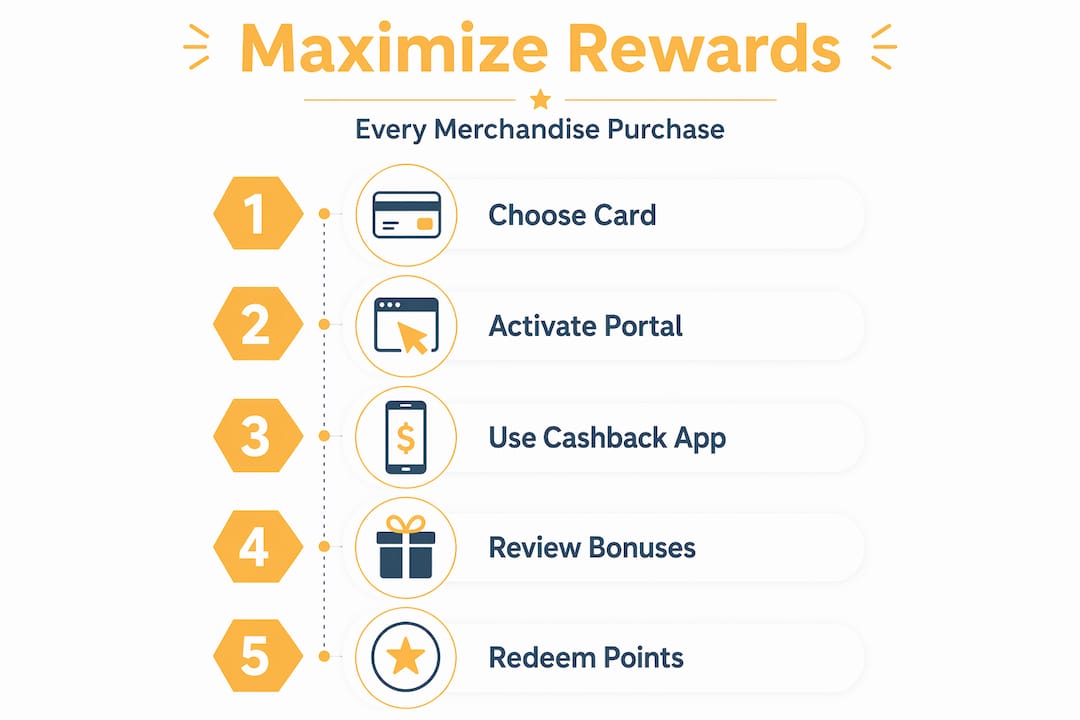
To use these systems well, follow this sequence for any online merchandise purchase:
- Open your shopping portal first. Log in to your portal (Chase, Rakuten, or similar) and search for the retailer before you navigate anywhere else.
- Click through to the retailer from the portal. This creates the tracked session. Do not open the retailer’s website in a separate tab.
- Disable ad blockers for the session. Ad blockers and certain browser extensions can break the referral tracking, which voids your bonus points.
- Complete checkout without leaving the session. Switching devices or applying unapproved coupon codes can sever the portal tracking link and forfeit your bonus.
- Submit receipts to cashback apps within their window. Apps like these often have daily submission caps. Missing the window means losing those earnings entirely.
Pro Tip: Keep a note on your phone with your top two or three shopping portals. Before any online purchase above $20, take 30 seconds to check whether that retailer appears in a portal. The bonus points on a single purchase can be worth several dollars, and the habit takes almost no effort once it’s established.
Cash-back apps like RetailMeNot and Ibotta offer variable percent cashback with submission caps and specific qualifying criteria, so reading the offer details before you buy prevents frustrating surprises at redemption.
Category multipliers, exclusions, and redemption timing
Not all merchandise purchases earn at the same rate, and this is the nuance that separates average rewards earners from people who actually get meaningful value from their programs.

Credit cards use category multipliers to incentivize specific spending. The BMO eclipse rise Visa awards 5X points on groceries, dining, and recurring bills, but only 1 point per $2 on everything else. That gap is enormous over a full year of spending. The key insight is that category multipliers only help you if your actual purchases align with the bonus categories on your specific card.
Here is where exclusions create real problems for shoppers:
- Gift cards: Most rewards programs explicitly exclude gift card purchases from earning points, even when bought at a qualifying retailer.
- Third-party marketplace purchases: Buying from a marketplace seller on a retailer’s website sometimes earns no points or reduced points compared to buying directly from the brand.
- Returns and adjustments: Points post on net purchases, so a return filed after points appear will subtract from your balance.
- Certificate expiration: The Citi Costco Visa issues annual cashback certificates that expire on December 31 of the issuance year. Missing that date means your earnings vanish entirely.
| Reward type | Typical earning rate | Common exclusions | Expiration risk |
|---|---|---|---|
| Credit card base rewards | 1X to 2X per dollar | Gift cards, cash advances | Varies by card issuer |
| Category bonus rewards | 3X to 5X per dollar | Non-qualifying categories | Varies by card issuer |
| Retailer loyalty points | 5X to 10X per dollar | Clearance, gift cards | Usually none if account is active |
| Shopping portal bonuses | 1X to 15X per dollar | Coupons, device switching | Usually 90 days to post |
| Cashback app rewards | 1% to 10% back | Caps, submission windows | Per-offer expiration |
Redemption timing is an underappreciated variable. Some programs release value incrementally, such as statement credits that can be applied from as little as $1. Others hold rewards until you hit a certificate threshold, which means sitting on unredeemed value for months. Reward certificates with expiration dates require careful tracking since failing to redeem within validity periods effectively cancels the reward.
Practical strategies for maximizing rewards on every purchase
Understanding the mechanics is useful. Applying them consistently is where the real returns come from. These strategies work whether you’re shopping for everyday merchandise or making a one-time purchase for something special.
- Match the card to the category. Use a card with grocery multipliers at grocery stores and a card with general merchandise bonuses everywhere else. Carrying two cards takes no extra effort once the habit is built.
- Always start online purchases through a portal. Portal tracking requires completing the transaction in one session, so build the habit of opening the portal before you open the retailer’s site.
- Submit receipts the same day you shop. Receipt submission windows and daily caps can forfeit earned rewards if you wait. Build a five-second habit of photographing receipts before you leave the store.
- Track certificate expiration dates. Add reward certificate expiry dates to your phone calendar when they’re issued. A $10 certificate is worth exactly $0 if it expires unused.
- Look for sweepstakes and member-only events. Some merchandise programs tie purchases to entries for exclusive giveaways, which creates upside beyond the stated point value. This is particularly compelling when the prize is an experience, like concert tickets, that you couldn’t easily buy at any price.
Pro Tip: Set a quarterly calendar reminder to audit your reward balances across all programs. People consistently lose hundreds of dollars annually to expired points and certificates they forgot about. Thirty minutes every three months prevents that entirely.
When brands like Winviptix connect merchandise purchases directly to sweepstakes entries, they add a reward dimension that pure points programs can’t match: the possibility of winning a live experience. That emotional dimension keeps shoppers more engaged than a statement credit ever could.
My honest take on rewards programs most people get wrong
I’ve watched shoppers spend years accumulating points and walk away with far less than they should have. Here’s the pattern I see most often: people focus entirely on the earning side and never optimize the redemption side.
The most common error is treating a shopping portal as optional. In my experience, the portal layer is often worth more than the credit card base rewards on the same transaction. A retailer offering 8X portal points on a $150 merchandise purchase is giving you a $12 to $15 equivalent in value before your card even clears. Most people skip this step because it requires an extra 30 seconds. That’s expensive laziness.
What I’ve also seen is that exclusive giveaways create a kind of loyalty that savings-based rewards never achieve. When a shopper wins concert tickets through a merchandise purchase entry, that brand becomes a story they tell. The emotional return on a once-in-a-lifetime experience dwarfs what any cashback rate could provide. That’s the insight most traditional merchandise rewards programs miss entirely.
Read the fine print once, seriously. Exclusions, submission windows, and expiration dates are where earned value disappears. I’ve personally tracked cases where consumers lost over $40 in accumulated value because a certificate expired two weeks before they remembered it existed. That money was already earned. It just wasn’t claimed.
The shoppers who get the most out of reward systems for shoppers aren’t the ones who spend the most. They’re the ones who understand the rules better than the average person and stay consistent about following them.
— Krys
Get more from your purchases with Winviptix

Winviptix takes the concept of purchase rewards and adds something most loyalty programs never offer: a real shot at an unforgettable live experience. Every purchase of exclusive merchandise and digital poster packs earns you entries into substantial giveaways, including concert tickets to sold-out events. Right now, you can enter the RÜFÜS DU SOL sweepstakes for tickets to Wrigley Field just by engaging with the brand. No inflated resale prices. No opaque lottery systems. Just a transparent, verified sweepstakes where your purchase works harder for you. Browse the full collection and enter a giveaway at winviptix.com.
FAQ
How do merchandise purchases earn rewards automatically?
Rewards are earned automatically on eligible net purchases when your credit card or loyalty account is in good standing, and points typically post within 10 days though it can take up to two billing cycles.
Can you stack credit card rewards with shopping portal bonuses?
Yes. Shopping portals like Chase’s offer 1X to 15X bonus points stacked on top of your credit card’s base rewards, as long as you click through the portal and complete the purchase in the same session.
What causes shoppers to lose earned rewards?
The most common causes are missed receipt submission windows, expired reward certificates, and breaking portal tracking sessions by switching devices or using unapproved coupon codes during checkout.
Do all merchandise purchases qualify for loyalty points?
Not always. Most programs exclude gift card purchases, and some exclude clearance items or third-party marketplace sellers. Always check the program’s terms to confirm which purchases qualify before assuming you’re earning.
What is the fastest way to earn more rewards on merchandise purchases?
The fastest method is to combine a category-bonus credit card with a shopping portal click-through before every online purchase, which can multiply your effective earning rate by three to five times compared to using a standard card alone.